
BUY 1 GET 1 HALF PRICE
Indoor life. Outdoor moments.
🐾 Built For Cats Who've Escaped Every Other Harness
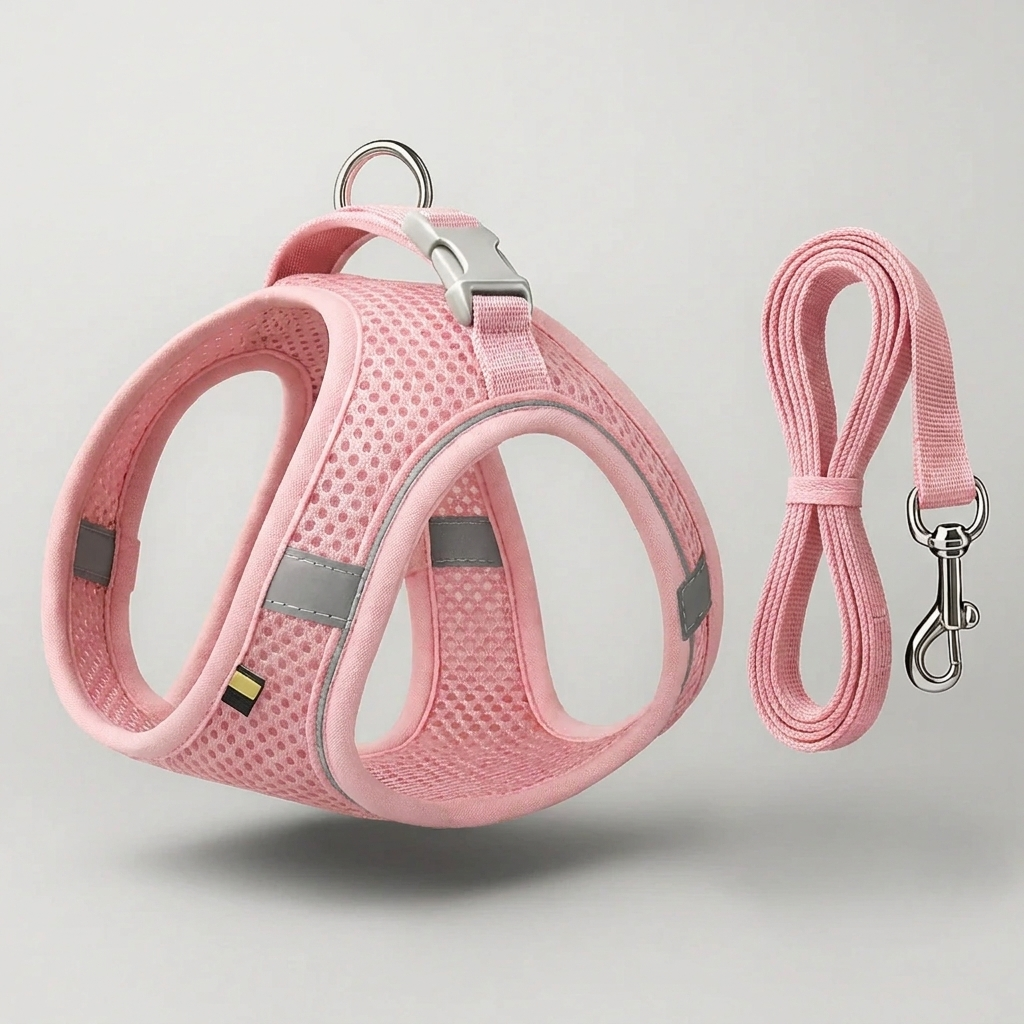
😮💨 No Wrestling, No Head Holes - Just Step In And Clip
🪶 Breathable Mesh She Won't Fight To Get Off
🌙 Reflective Detail So You're Both Seen After Dark
📏 Not Sure On Size? We'll Exchange Until It's Right
Couldn't load pickup availability
The Roam Harness comes in five sizes:
XXS: Chest 28-30cm/11-12in · Neck 24-26cm/9.5-10in · For cats 0.5-1.5kg/1-3lbs.
XS: Chest 31-34cm/12-13.5in · Neck 29-32cm/11.5-12.5in · For cats 1.5-3kg/3-7lbs.
S: Chest 35-40cm/14-16in · Neck 33-36cm/13-14in · For cats 3-6kg/7-13lbs.
M: Chest 44-50cm/17-20in · Neck 38-44cm/15-17in · For cats 6-10kg/13-22lbs.
L: Chest 50-59cm/20-23in · Neck 44-52cm/17-20.5in · For cats 10-15kg/22-33lbs.
All sizes include a matching 138cm/54in lead. If your cat is between sizes, we recommend going up a size. Free exchanges until the fit is perfect.
Due to the large number of orders we're experiencing, our delivery time is currently:
If you are unhappy with your purchase for any reason, simply contact us within 30 days of receiving your product.
We will process your request quickly and easily, be it through exchange, return or refund - entirely according to your wishes.
More FAQs below ✨
View full details



★★★★★
"We tried two other harnesses before this and she'd just freeze and fall over sideways. With The Roam she was walking within five minutes. I think because it's so light she doesn't really register it's there. We've been doing little garden trips every evening now and she absolutely loves it."

★★★★★
"My cat has stared out the window every single day for three years and I always felt terrible about it. This harness was so easy to put on — no fighting, no head holes — and the first time I took her out she just sat in the grass sniffing everything for twenty minutes. I nearly cried. Worth every penny."

★★★★★
"We tried two harnesses before this and she'd freeze and flop sideways every time. I was ready to give up. But this one is so light she honestly didn't seem to notice it. Within five minutes she was walking around the garden.We go out every evening now and she sits by the back door waiting for me. Best purchase I've made for her."

You've seen it. The ears twitch when a bird lands on the fence. The paws press against the glass when the neighbour's cat walks past. She sits at the window for hours — watching a world she's never been allowed to touch.
Indoor life keeps her safe. But safe and fulfilled aren't always the same thing. The Roam Harness lets you give her both. Ten minutes in the grass, feeling the breeze, sniffing the things she's only ever watched — that's not a luxury. For a cat with natural instincts and nowhere to put them, it's the missing piece.
You don't need to take her on a hike. You just need to open the door.


It's not that you didn't try. You bought a harness. You watched the YouTube video. You got it over her head, clipped it on — and she froze. Went stiff. Fell sideways. Refused to move.
That's not your cat being difficult. That's a harness that was designed for dogs and resized for cats. Head-hole designs trigger a claustrophobic panic response in most cats. Heavy materials weigh them down. Stiff straps restrict their movement. The cat doesn't feel safe — so she shuts down.
The Roam Harness was built around how cats actually move. Step-in design — no head holes. Soft, breathable mesh she barely registers on her body. Secure enough to hold through a panic pull, light enough that she forgets it's there within minutes. That's why she walks in this one.


Here's what we've found. If a harness takes longer than thirty seconds to put on, it stops being part of your routine. You skip Tuesday because it's raining. You skip Thursday because she's napping and you don't want to wrestle her into it. By the following week, the harness is in a drawer and the window is back to being the closest she gets.
The Roam Harness goes on in under thirty seconds. Step in, clip, adjust, done. No threading legs through loops. No pulling anything over her head. No stress for her, no friction for you. The easier it is to put on, the more often you actually use it — and the more of the world she gets to see.
Most cats won't walk in a harness the first time — that's normal. What usually happens with The Roam is that cats start moving within five to ten minutes because the material is light enough that they stop noticing it. The key is letting her set the pace. Start indoors, let her wear it around the house for a few sessions, then try the garden. Some cats are walking confidently within a day. Others take a week. The harness isn't the hard part — the adjustment period is, and that's about your cat, not the product.
Most cat harnesses are adapted from dog designs — they rely on a loose vest or a single clip that cats can reverse out of by pulling backwards. The Roam uses an anti-escape design that tightens gently under backward pressure rather than loosening. It's specifically engineered for the way cats move when they panic — twisting, flattening, and reversing. We can't guarantee no cat will ever slip anything, but this is built for the cats that have escaped everything else.
Step-in design. Place it flat on the ground, guide her front paws into the two openings, lift the back panel up, and clip it at the top. No head holes, no threading legs through loops, no pulling anything over her face. Most owners have it on in under thirty seconds once they've done it a couple of times.
Measure around the widest part of your cat's chest, just behind the front legs, with a soft tape measure. Our size guide on the product page matches that measurement to the right harness. If you're between sizes, go with the larger one — the straps are fully adjustable. And if the fit isn't right, we offer free exchanges until you find the one that works.
This is really common — especially if she's never worn a harness before. It's called the "harness flop" and it's a temporary response, not a rejection. Most cats do it because the sensation of something on their body is unfamiliar. The Roam's lightweight mesh helps reduce this because there's less material triggering that response. Give her a few short indoor sessions with treats and she'll usually start moving normally within a day or two.
The Roam Harness is designed for adult cats. For kittens under six months, we'd recommend waiting until they've grown into a more stable size so the harness fits securely. If your kitten is older and fits within our smallest size range, it should work fine — but always supervise outdoor time closely with younger cats.
Yes. A lot of our customers use The Roam for vet trips, car journeys, and any situation where they need their cat secure but not crated. It's not a substitute for a carrier in a moving vehicle, but paired with a carrier or seatbelt clip, it gives you an extra layer of control and prevents bolting when you open the door.
Soft, breathable mesh with adjustable nylon straps and a secure clip fastening. The mesh is lightweight enough that most cats stop registering it on their body within a few minutes, but strong enough to hold under pressure. The reflective elements are woven into the strap edges for visibility at dusk without adding bulk.
The contact surfaces are soft mesh with no rough edges, seams, or hard points sitting against the skin. As long as the fit is correct — snug but not tight — there should be no rubbing or irritation. We'd recommend checking the fit after the first couple of uses and adjusting the straps if needed.
Yes — The Roam Harness comes with a matching lightweight lead included. It clips onto the D-ring on the back of the harness. The lead is long enough to give her room to explore but short enough that you stay in control.
Yes. Hand wash in cool water with mild soap and air dry flat. The mesh dries quickly — usually within a couple of hours. We don't recommend machine washing as it can weaken the clip mechanism over time.


