
🦷 Cleans Teeth While They Chew
🐱 Works On Picky Cats
🚫 No Brushing Required
🌿 100% Natural Silvervine
Couldn't load pickup availability
Our 10 pack is our most popular option — perfect for seeing how your cat responds. Each stick lasts multiple sessions (most owners offer it for 10-30 minutes, then put it away), so a 10 pack typically lasts 6-8 weeks with daily use. Multi-cat households usually grab the 20 pack for better value.
Studies show around 80% of cats respond to silvervine — including many that completely ignore catnip. Unlike toys that get batted once and forgotten, silvervine triggers a natural response that keeps them engaged. Most cats will grip it, bunny-kick it, and chew enthusiastically. That said, every cat is different — if yours isn't interested, our 30-day money-back guarantee has you covered.
The dental stick that works because your cat can't stop chewing it.
Most cat dental products fail for the same reason: cats don't cooperate. These sticks work differently — because they exploit a biological drive your cat already has.
Silvervine (Actinidia polygama) triggers a euphoric chewing response in around 80% of cats through six active compounds. The real driver is the gall fruit — a naturally-formed growth on the silvervine vine with the highest concentration of nepetalactol and actinidine, the compounds responsible for sustained engagement. We attach one to every stick.
Here's what that means for their teeth: the longer they chew, the more the fibrous wood texture works against tooth surfaces — physically disrupting plaque before it hardens into tartar. It's the same mechanical principle as chewing on prey bone in the wild. No enzymes, no additives — just friction, saliva, and consistent gnawing.
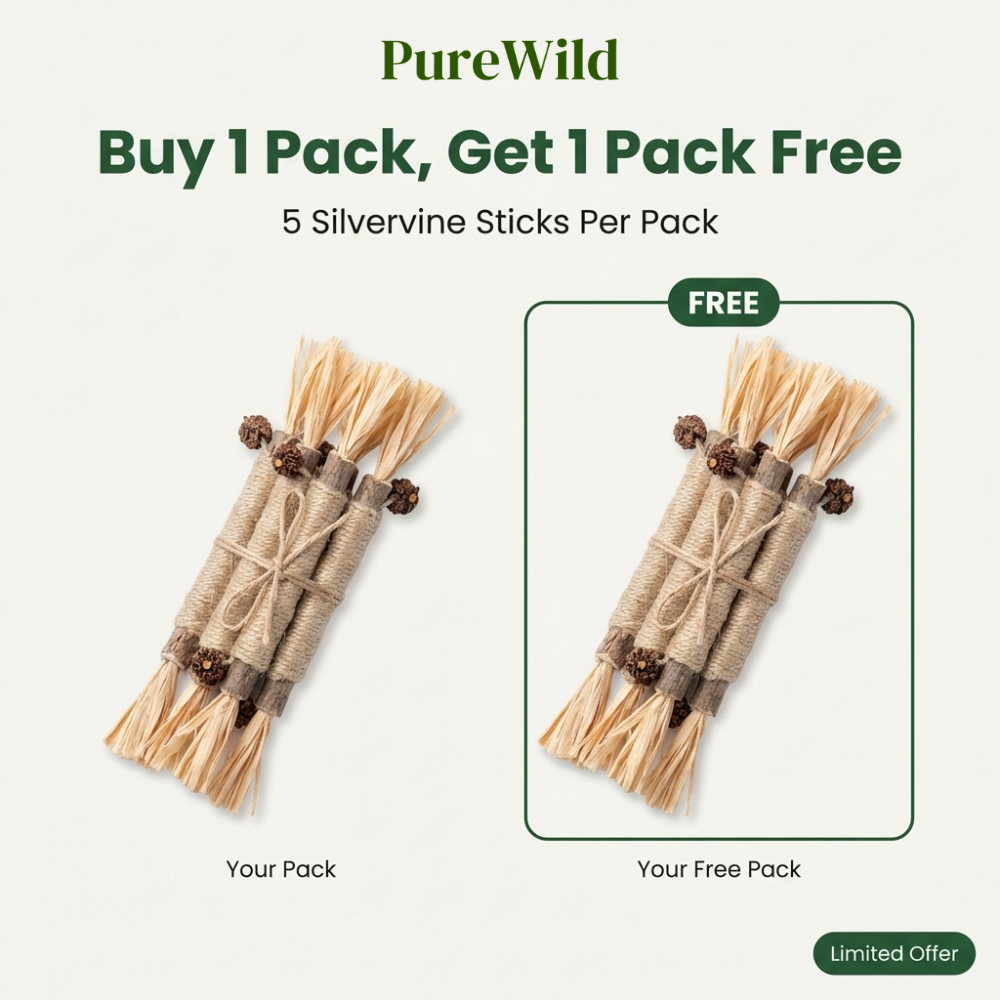
The sisal rope wrapping adds rougher texture at the base, targeting the gum line where plaque tends to accumulate. The raffia grass outer layer creates a crinkle sound that draws them in before they even start chewing.
Due to the large number of orders we're experiencing, our delivery time is currently:
If you are unhappy with your purchase for any reason, simply contact us within 30 days of receiving your product.
We will process your request quickly and easily, be it through exchange, return or refund - entirely according to your wishes.
More FAQs below ✨
View full details



★★★★★
My cat is usually so picky with toys but this was different. The second I gave him a silvervine stick he started rolling, chewing and sprinting around the room. Best purchase l've made for keeping him entertained.

★★★★★
I wanted something natural that supports dental health and these are perfect. My cat chews them every day and it's helped keep her busy while I'm working.

★★★★★
I thought my couch was destined to keep getting scratched. After using these sticks it actually redirects his energy into chewing them instead.

Cats hide dental pain. By the time you notice, it's usually already a problem.
Studies suggest up to 70% show signs of dental disease by age 3. Most owners never see it coming because cats mask discomfort until it's already serious.
Every time your cat chews a silvervine stick, the fibrous wood scrapes across the tooth surface — disrupting soft plaque before it hardens into tartar.


Most dental products only work if your cat actually uses them. That's the issue.
Catnip works through a single compound. Silvervine contains at least six — which is why 80% of cats respond to it, including cats completely immune to catnip. The gall fruit carries the highest concentration, creating a chewing response that lasts far longer than any treat.
More chewing means more contact between fibrous wood and tooth surface. More contact means more plaque disrupted per session.


Dental disease doesn't announce itself. By the time you notice — drooling, eating on one side, avoiding food — it's usually been building for months.
Vets call it the hidden disease. Owners call it a £800 surprise at a check-up.
These sticks won't reverse disease that's already there. But for cats who are fine right now, daily chewing is the difference between staying that way and slowly not. Prevention costs pennies a day. The alternative costs considerably more.
Yes. Silvervine sticks are made from 100% natural plant material — with no added chemicals, dyes, or additives.
Unlike many plastic or brittle toys, silvervine breaks down into softer, fibrous pieces rather than sharp splinters.
Cats in parts of Asia have interacted with silvervine for centuries. We still recommend supervising the first few sessions to understand how your cat chews.
Most owners use them daily in 10-30 minute chewing sessions supporting dental maintenance and give your cat consistent enrichment. You don't need to let them destroy a whole stick in one sitting. Most owners offer the stick, let their cat go at it, then put it away. One stick can last a week or more this way.
1. Gall fruit triggers compulsive chewing — nepetalactol and actinidine activate your cat's pleasure response, driving them to gnaw rather than just sniff and walk away.
2. Fibrous wood creates friction — the natural grain of silvervine wood acts like a coarse fibre against the tooth surface, disrupting the soft plaque film that builds up daily.
3. Sisal targets the gum line — the wrapped rope section reaches where plaque is most problematic: the junction between tooth and gum.
4. Saliva does the rest — increased saliva during chewing helps buffer oral pH and reduce bacterial load naturally.
The longer the session, the more effective each step. The gall fruit is what makes sessions long.
Silvervine contains six active compounds that trigger your cat's pleasure receptors — catnip only has one. That's why approximately 80% of cats respond to silvervine, compared to only 60-70% for catnip. If catnip has never worked for your cat, silvervine might be the thing that finally does.
Because silvervine isn't just a toy — it triggers an actual biological response in your cat's brain. Most cats don't just sniff and walk away. They grip it, roll with it, and chew it obsessively. The texture also matters: the natural wood gives them something satisfying to gnaw on, which taps into their instinct to chew. Still skeptical? That's what our guarantee is for.
Yes - through mechanical action, not magic ingredients. When your cat gnaws on the fibrous texture, it physically scrapes against teeth and gums, which may help reduce plaque buildup over time. It's similar to how wild cats clean their teeth by chewing on prey bones.
This isn't a replacement for vet cleanings if your cat has existing dental disease, but it's an easy way to support daily maintenance — especially if brushing isn't an option.
Silvervine sticks are fibrous and break down into soft, stringy pieces — not sharp splinters like some wood toys. The texture is closer to a dense celery stalk than a brittle twig. We recommend supervising early sessions to see your cat's chewing style, and removing the stick if it gets very small.
Most vets recommend waiting until past the teething stage - around 6 months. The response often gets stronger as cats mature. Senior cats love them too - we hear from owners whose older cats suddenly have a "new favorite thing" after years of ignoring toys.
It depends on your cat's chewing intensity and how you use them. If you let your cat go unsupervised, they might shred one in a single session.
But most owners offer the stick for 10-30 minutes of play, then put it away. Used this way, a single stick can last a week or more. Supervise chewing and remove small pieces once worn down.
Every cat is different. Silvervine dental sticks are designed to support natural chewing and oral enrichment, which may help reduce plaque buildup and improve breath over time.
This product is not intended to diagnose, treat, cure, or prevent any disease and is not a substitute for professional veterinary care. Results may vary depending on your cat’s age, habits, and dental condition.


